Beans Jollof Recipe For World Pulses Day.
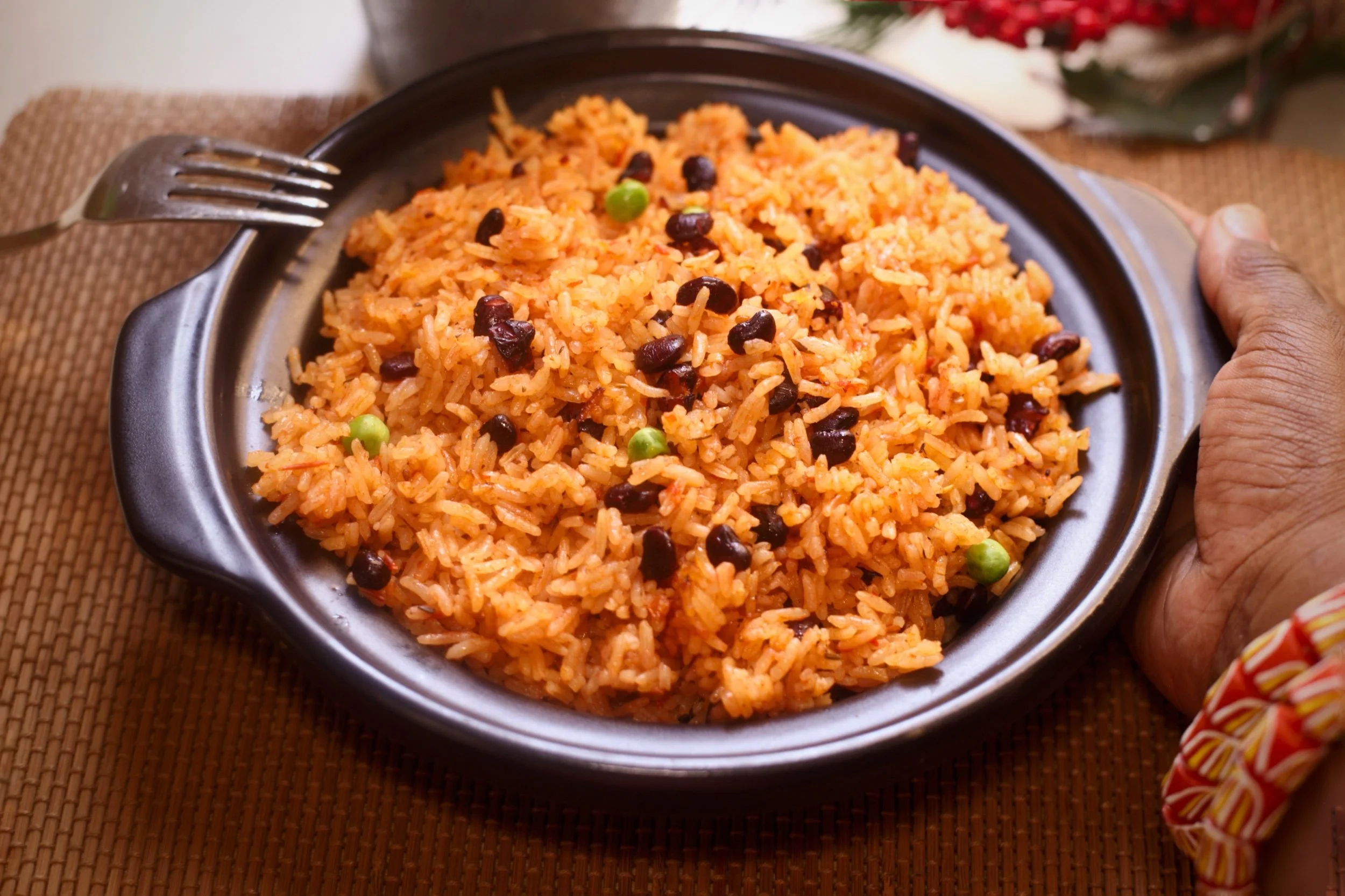
Every year on 10th February the world marks #WorldPulsesDay, a day set aside to highlight the small but mighty seeds of legume plants. Pulses vary from country to country and here in Ghana we have a variety of pulses. Before I delve into what these are, let me share the Beans Jollof I boldy prepared a few days ago. I use the word ‘boldly’ as some Jollof purists might come for me after reading this.
Why have I never not thought of it but beans jollof makes absolute sense! Jollof by itself is simply steamed rice in a tomato-based stew and hardly carries any nutritional benefits save for the carbs in rice. So a few days ago, my friend Gloria whatsapped me and asked if I had tried cooking jollof with beans before. Naturally I said no🤷🏽♀️. But ma’am consider my interest piqued! Beans in jollof would literally be a protein fortified Jollof! After a few days of mulling about how I’d go about cooking it, I grabbed the bull by it’s horns and swung high onto it’s back!
I’m assuming you, my dear gentle reader, are already familiar with making Jollof, so this is more of a guide on how I cooked the beans to achieve the best texture and flavor in my Jollof.
Soak Beans Overnight
I used the our local red beans which contains phenols and soaked these overnight in hot water and sorghum leaves (waakye leaves) for a deeper purplish colour. Soaking beans overnight hyrdates the beans which means they get to cook faster and breaks down sugars thus less bloating and gas for you. 😉 Season the beans with salt to improve flavour.
Cooking The Beans
2. Pour out the overnight soaking water as this contains the sugars you’re trying to get rid of. Pour fresh water into the beans. The ratio of water to beans should be 1:2 i.e if you’re cooking one cup of beans then add in two cups of water due to the absorption of the liquid by beans. Place this on fire adding 2 -3 bay leaves for much faster cooking iykyk.
Test the texture of the beans every 8-10minutes. Turn off the heat when the beans have increased in size and feel firm but slightly tender. You don’t want mushy beans in the Jollof.
Beans To Jollof
3. When the Jollof is halfway done (10-15minutes to being ready), pour the beans in sans the cooking liquid. Mix the beans in gently and cover the Jollof for steaming to cook both beans and rice.
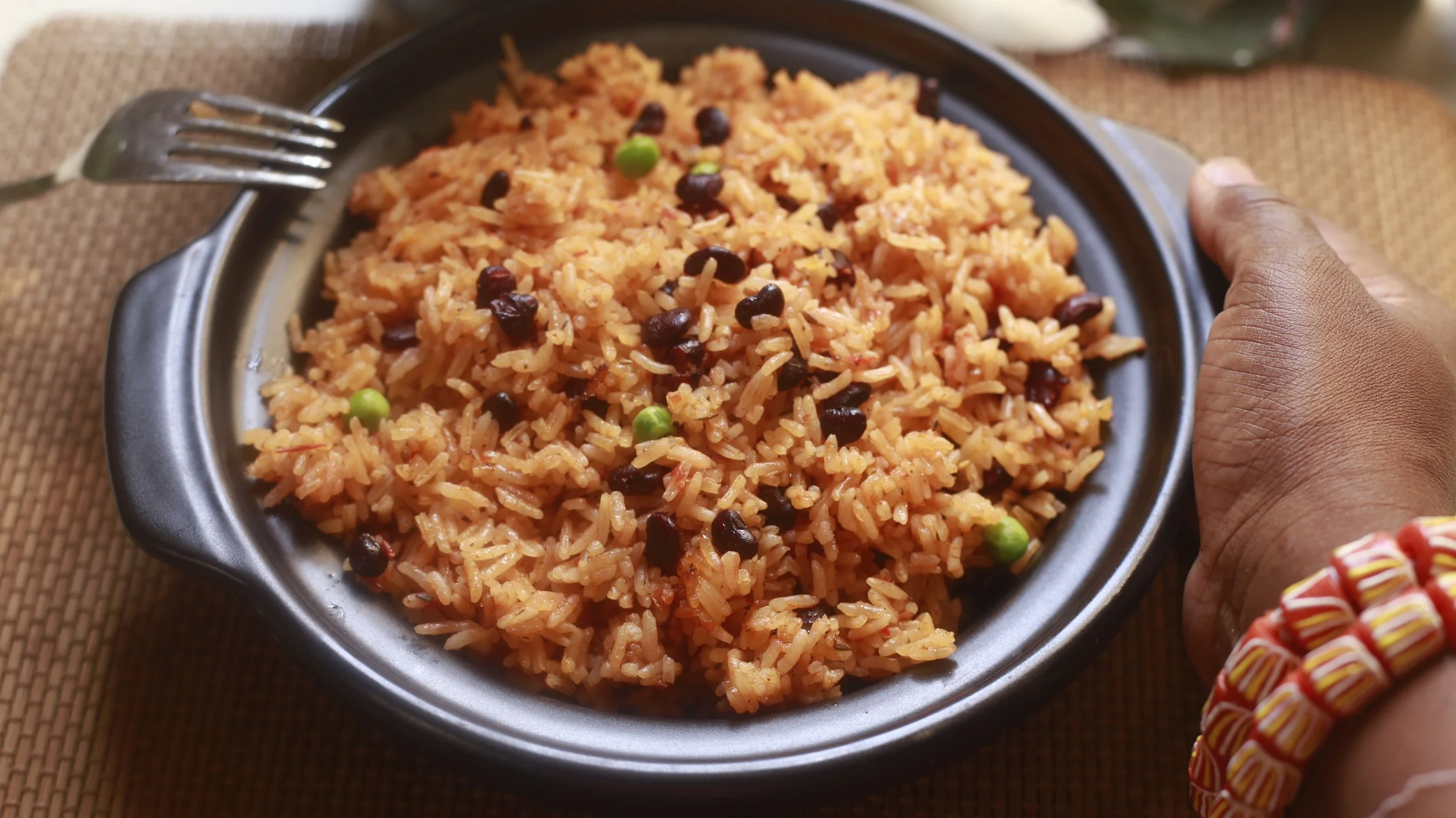
The beans are cooked perfectly and once your jollof tastes amazing you’re assured of a winning dish which is healthy for you and the family. If you have young children who refuse to eat beans (like mine) then this is a perfect solution! The fusion of beans in Jollof adds fiber, iron and protein to the rice and actually makes you feel full faster. Add your favourite meat protein if you want or go lighter with Tofu or grilled mushrooms.
This Beans Jollof works for school feeding programs for children to gain more nutrition.
So back to the pulses we have in Ghana.
Beans
• Black-eyed beans (Cowpeas)
Very popular and used for dishes like waakye, red-red, beans stew, and koose (akara).
• Brown beans
Often used in beans stew, red-red, and porridge-style beans dishes.
• Red beans (Navy beans)
Used in red red stews and sometimes added to rice dishes.
• Bambara beans (Bambara groundnuts / Abɔbɔi )
Commonly used to make Abɔbɔi a slow-cooked bambara beans which has a creamy base with softened beans.
Bonus: Pulses Closely Related & Commonly Used in Ghana
(Though sometimes grouped differently in agriculture, they are nutritionally similar and widely eaten.)
• Groundnuts (Peanuts)- Used in groundnut soup, sauces, and snacks.
• Soybeans- Used in soya products, milk, flour, and fortified foods.
Let’s eat more of our locally grown beans to sustain not only our bodies but also sustain our soils which rely on pulses to enhance soil structure and fertility.