Recipe For The Viral Dumplings Lasagna All Over Your TikTok FYP.
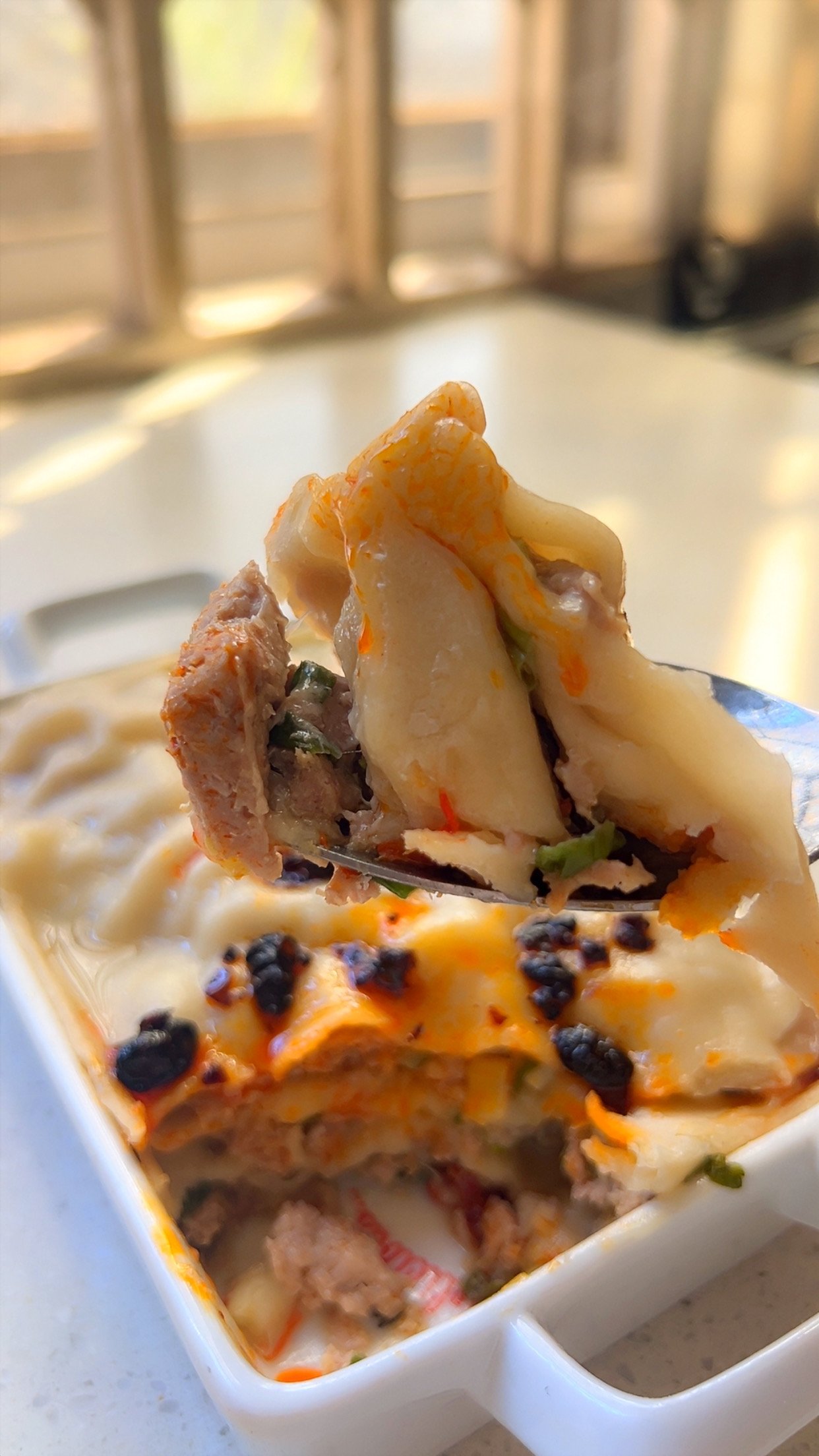
Having made regular dumplings since I opened a ramen restaurant back in 2020, I couldn’t help but try out the viral dumplings lasagna all over my TikTok fyp. What a genius idea! Lasagna is indulgent, satisfying and a sensational comforting dish, dumplings is just that snack which exudes warmth and deliciousness from the doughy wrapper to the juicy umami & savoury meatiness.
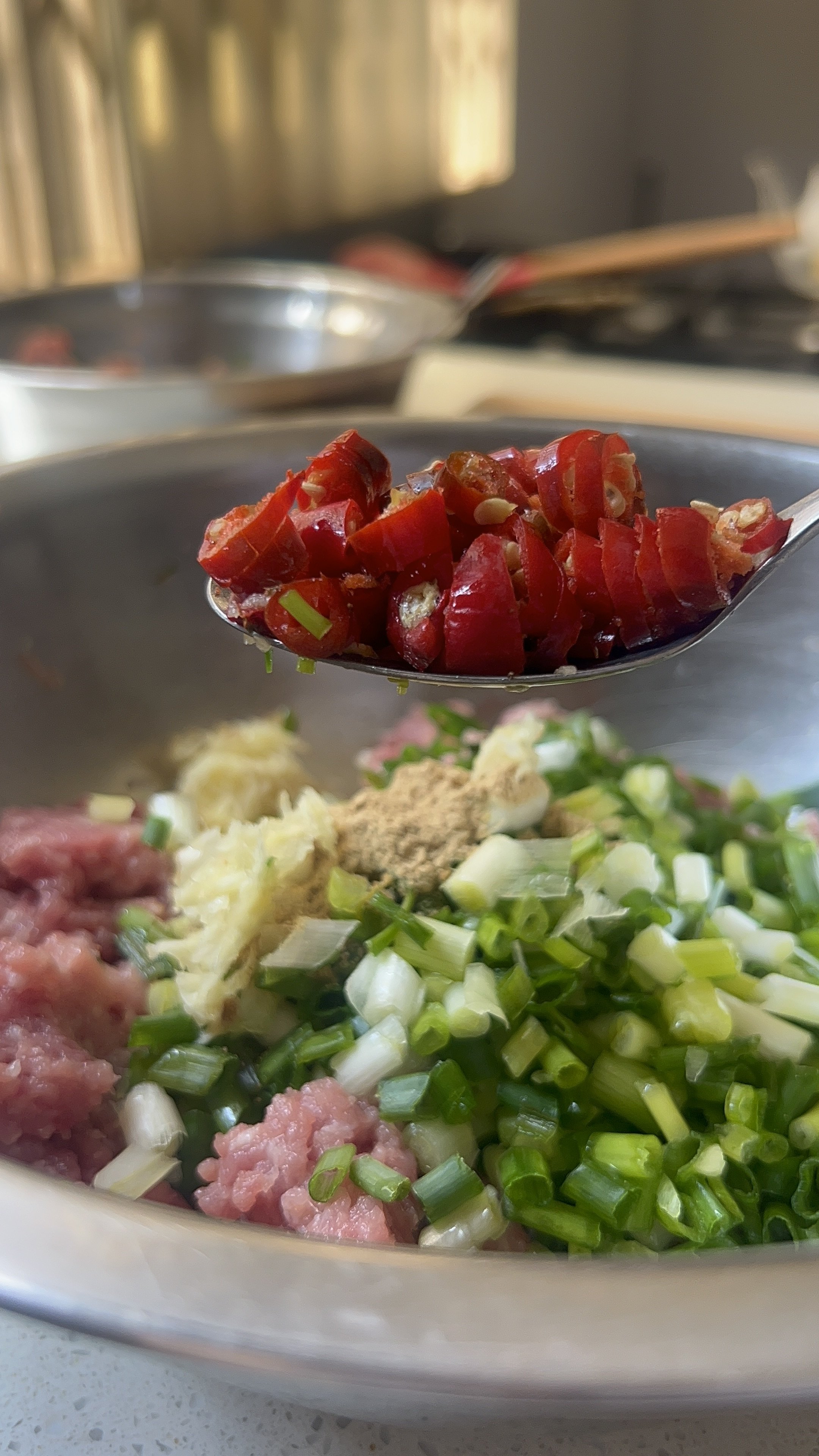
Don’t be discouraged by the dumplings wrapper, it’s actually very easy to make and ready for use within 30 minutes. The best part which is the ground meat can be either pork, chicken, tofu or beef. I used ground pork in this recipe for a succulent balance between juicy liquid and meat. It’s best to make the meat mixture first to allow the seasonings to do their magic.
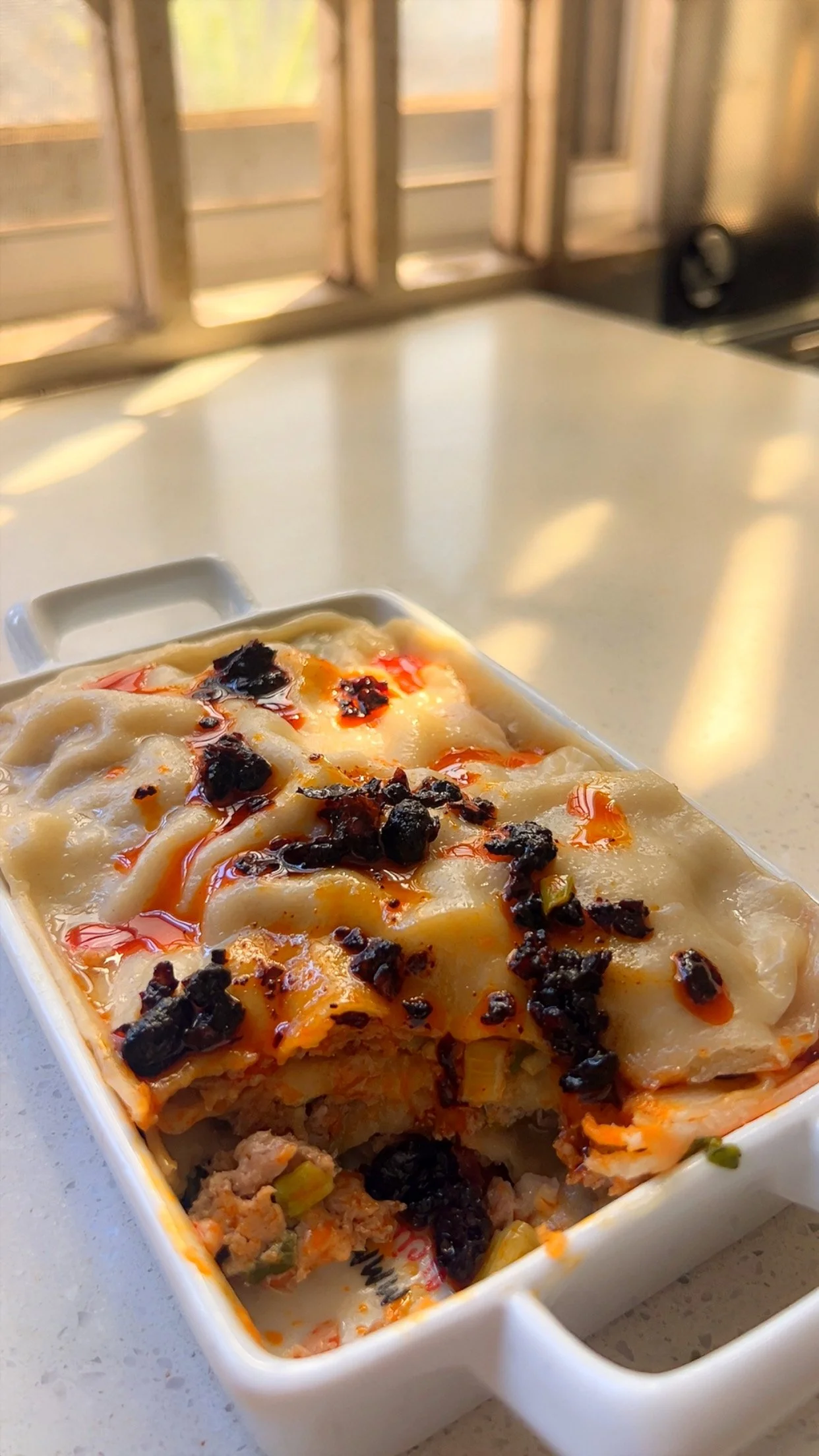
The container for the lasagna can either be rectangular or round. I’ve always had this beautiful rectangular mini lasagna bowl which i’ve never used and came perfectly handy for this recipe.
Let’s dive in shall we?
Ingredients For The Dumpling Lasagna Filling (same for regular dumplings)
Ground pork
Minced garlic
Chopped spring onions
Chopped fresh cayenne pepper
Ground ginger
Sesame oil
Light soy sauce
Pinch of salt
Ingredients For The Dough Wrapper
1 cup of all-purpose flour (this makes about 5 sheets of dough sheets depending on the size of the bowl you’re using)
1/2 tsp baking powder
1/4 tsp salt/
Very warm water
Equipment
Large mixing bowl
Wooden spoon or spatula
Rolling pin
Bench scraper or knife
Plastic wrap or damp towel
Method
1. Mix all the dry ingredients for the dough sheets using a fork
2. Add the very warm water: This should be very warm but shouldn’t burn when you insert a finger. Make a well in the center and pour in the warm water. Stir with a spoon or your hand until the dough starts to come together into shaggy bits. If the dough is too dry, add a teaspoon of warm water at a time; if too sticky, sprinkle a little flour.
3. Knead: Turn the dough out onto a lightly floured surface and knead for about 6–8 minutes until smooth and elastic. The dough should be soft but not tacky. Make a round shape. When you press on the surface of the dough, the indent of your finger should see the dough coming back up easily and quickly. Set aside in a floured bowl to rest for the gluten to relax for 20 minutes or maximum 30minutes.
4. Portion: Cut the dough into quarters, then roll each quarter into a sheet wide enough to cover the surface of your container. Cover all the sheets with a napkin to prevent the dough from drying out.
5. Using a spoon, start layering by starting with the minced meat first followed by one sheet. Another meat layer and then a sheet until you reach the top. Use a brush to spread a bit of sesame oil on top of the last sheet layer for a really well moisturized indulgent dough.
6. Steaming: If you have a traditional steamer basket you can use this or the steamer basket in the rice cooker will also work well. Pour water into the rice cooker, place the steamer basket atop and then the lasagna bowl. Cover. Steam for 15 minutes.
7. The Eating: Sprinkle some chilli oil, spring onions and sesame seeds onto the lasagna or keep it simple with only the chilli oil. Dig in.
I was completely full by the time I had gone through this bowl. It’s very filling, comforting and absolutely a delight in each scoop! Dumplings Lasagna is for those who don’t want to go through the laborious wrapping of dumplings at the dough stage. This is much easier to be honest.
Here’s a video I made for this recipe on my Youtube. Make it and share your experience too!
You can turn up the heat by increasing the fresh Chilli pepper or using ground Chilli powder. Dumplings must however weigh more on the savory side than spicy end of things. Enjoy!
Here’s a bit of history on Dumplings and Lasagna
Dumplings have a long, wandering history that traces back thousands of years and spans many cultures. Simple combinations of dough wrapped around fillings—meat, vegetables, or sweet pastes appeared independently in places such as China, Central Asia, and Europe. In China, jiaozi are linked to the Eastern Han period and were prized both for their portability and for their role in festivals; meanwhile, similar parcels traveled along trade routes, evolving with local ingredients and techniques into pierogi, momo, empanadas, and more.
Lasagna’s origins lie in the layered cooking methods of the Mediterranean. Early forms of pasta can be traced to ancient Rome and to the Arabic influence in Sicily, where thin sheets of dough were baked with sauces and cheeses. The modern lasagna, with wide pasta sheets layered with ragù, béchamel (or ricotta), and cheese, solidified in medieval and Renaissance Italy, especially in regions like Emilia-Romagna. Over time it became a beloved household dish, celebrated for its hearty layers, ability to feed a crowd, and endless regional variations that reflect local ingredients and tastes.